Transitions are a defining part of life for many Service children. Frequent moves, new school environments, and the emotional impact of deployment mean that change is not a one‑off event—it is a recurring part of their educational journey. With the right support, transitions can become smoother, more predictable, and far less overwhelming for children and families.
Our aim is to help schools create welcoming, informed, and consistent processes that make every new beginning feel positive.
Understanding Transitions
Why transitions matter
Service families often move due to new postings, training requirements, or mid‑year relocations. Each move brings:
- A new school environment
- New teachers and support staff
- New routines and expectations
- New friendships to build
These changes can create uncertainty for children, affect their confidence, and sometimes result in gaps in learning. Schools that understand these unique pressures are better equipped to help Service pupils settle quickly and thrive.

School Admissions and Mobility
The School Admissions Code recognises the unique circumstances of Service families and ensures they are not disadvantaged by mobility. Schools and local authorities must consider:
- Applications made using a temporary address, unit address, or future posting address
- Admission even when classes are full, if mobility justifies additional places
This guidance exists to help families transition smoothly and to make sure that children can secure appropriate school places without delay.
We can support families and schools with understanding local options, applying for places mid‑year, and navigating situations where preferred schools are full.
Helping a Child Settle In
Transition isn’t just about a new building—it’s an emotional, social, and academic shift. Strong induction practices help children feel safe, welcome, and understood from the moment they arrive.
Effective approaches include:
- A tour of the school to build familiarity
- A buddy to support friendship‑building and help navigate new routines
- Regular check‑ins with pastoral staff
- Time and space to ask questions or share worries
- A teacher who understands the child’s story and previous experiences
These steps provide reassurance and help children feel part of their new school community more quickly.

How Families Can Help
Parents and carers play a crucial role in creating a sense of continuity through change. Simple actions can make transitions feel less overwhelming for children, such as:
- Talking about what will stay the same after the move
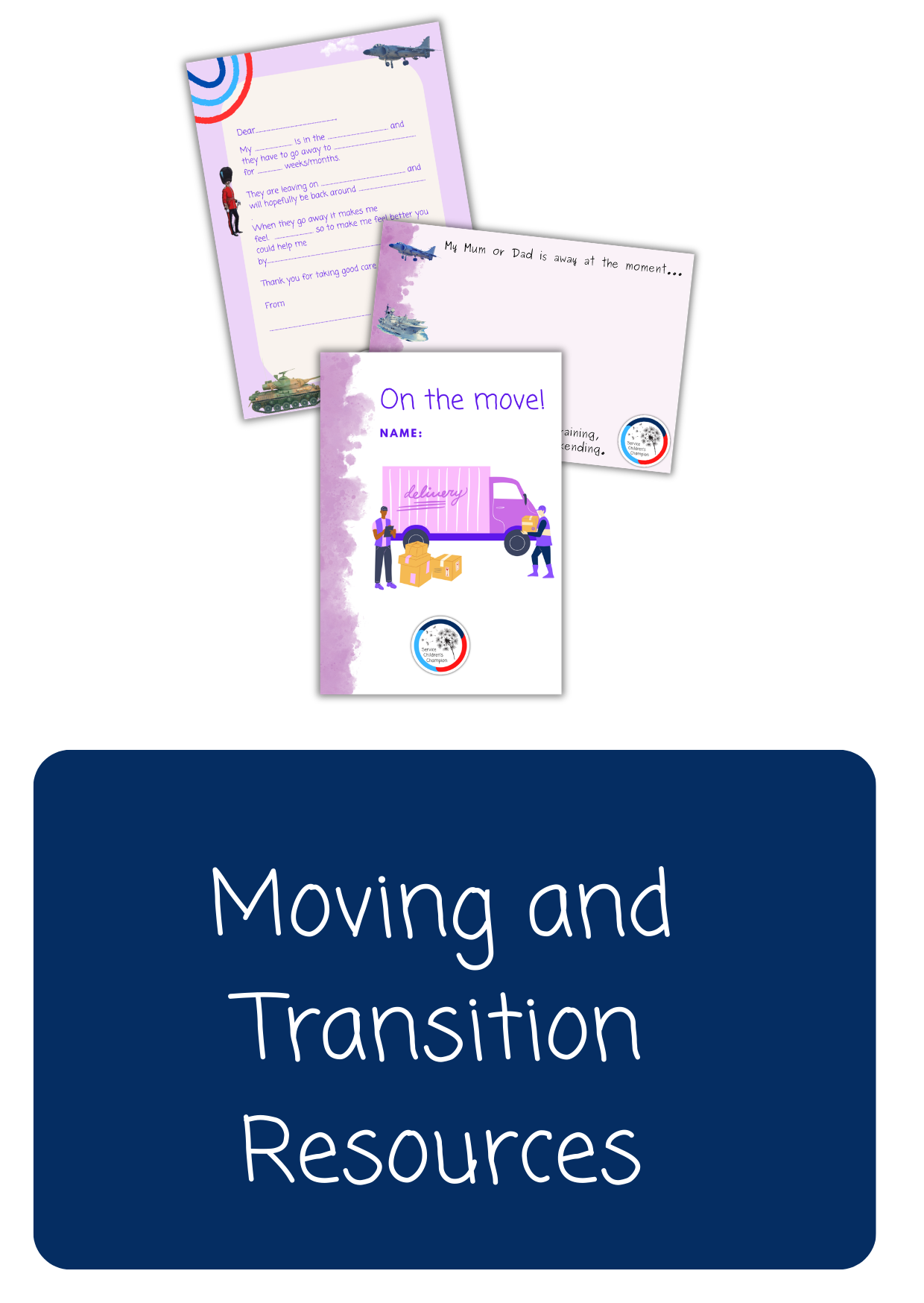
- Creating a “getting to know me” booklet to share with the new school
- Keeping familiar routines wherever possible
- Asking the new school for welcome videos or photos
- Checking in regularly during the first few weeks
These small steps can make a big difference in helping children adjust emotionally and socially.
Communication Between Home and School
Strong communication creates consistency. Families can share helpful information such as:
- An overview of Service‑life experiences
- Any worries linked to mobility or deployment
- Strengths, hobbies, and learning preferences
- Previous interventions or supports that worked well in other schools
Schools value this information because it helps staff understand and support the child as a whole person, not just as a new pupil.
Transition Tools and Checklists
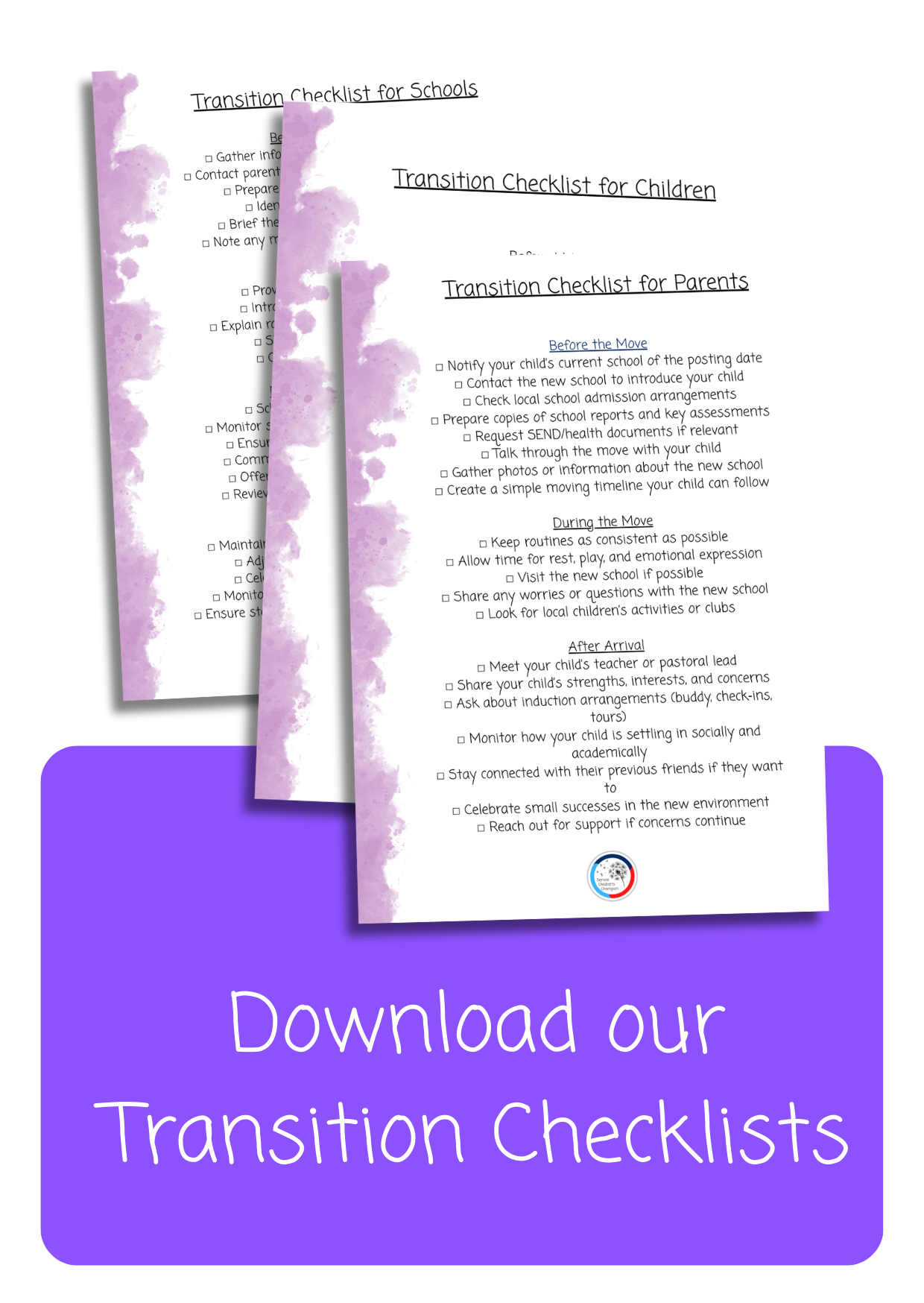
Our transition checklists offer simple, practical steps that parents, schools, and children can follow before, during, and after a move. They help everyone stay organised, informed, and supported—making the process smoother and less stressful. These tools are designed to:
- Reduce uncertainty
- Improve communication
- Strengthen emotional support
- Ensure continuity of learning
Creating Positive Transitions
With the right systems, empathy, and communication, schools can transform transitions from moments of uncertainty into opportunities for growth and connection.
We’re here to help every step of the way—supporting schools, families, and children as they navigate the unique rhythms of Service life.