Local authorities across the UK are increasingly recognising the value of a Service Children’s Champion — a named strategic lead responsible for improving outcomes for children from Armed Forces families. This page outlines:
What the North Yorkshire model looks like
How the role has evolved and why
How national research and guidance inform the approach
A suggested job description
Funding considerations
Useful links to key reports and frameworks
Why a Champion Role Matters
Service children face unique pressures linked to mobility, deployment, family separation, and transitions. National guidance highlights the need for strategic, joined‑up local support.
- The DfE/MOD Service Pupils in Schools: Non‑statutory Guidance (2025) outlines the challenges of mobility, deployment, and the Armed Forces Covenant Duty, and recommends that local authorities designate a Service Pupil Champion.
- The Living in Our Shoes review (Andrew Selous MP, 2020) evidences the impact of repeated relocations, long separations, and disrupted access to services, calling for improved recognition and coordinated local support.
- Research from Brunel University London evaluates the impact of North Yorkshire’s Champion model, demonstrating how coordination, advocacy, and specialist knowledge strengthen outcomes for children and families.
Together, these sources reinforce that a dedicated Champion role ensures no Service child is disadvantaged due to their family’s military commitment.
Core Responsibilities of a Service Children’s Champion
The outline below is based on North Yorkshire practice and national guidance.
1. Strategic Leadership
- Provide the local authority’s strategic lead for Service children
- Influence education, inclusion, and admissions policy
- Ensure compliance with Armed Forces Covenant Duty guidance
2. Support for Schools & Settings
- Deliver training and resources on mobility, deployment, and transition
- Offer consultation for vulnerable pupils or complex transitions
- Promote use of the Common Transfer File and shared good practice
3. Partnership Working
- Maintain strong links with garrisons, stations, and military welfare teams
- Represent Service children within multi‑agency processes
- Support local Armed Forces Covenant boards and community programmes
4. Data, Tracking & Reporting
- Analyse trends in mobility, attendance, wellbeing, and attainment
- Report to senior leaders and elected members
- Use evidence to inform improvement planning
5. Community Engagement
- Facilitate events, pupil voice opportunities, enrichment activities
- Build supportive networks for families, especially during deployment


Non-Statutory Guidance 2025:
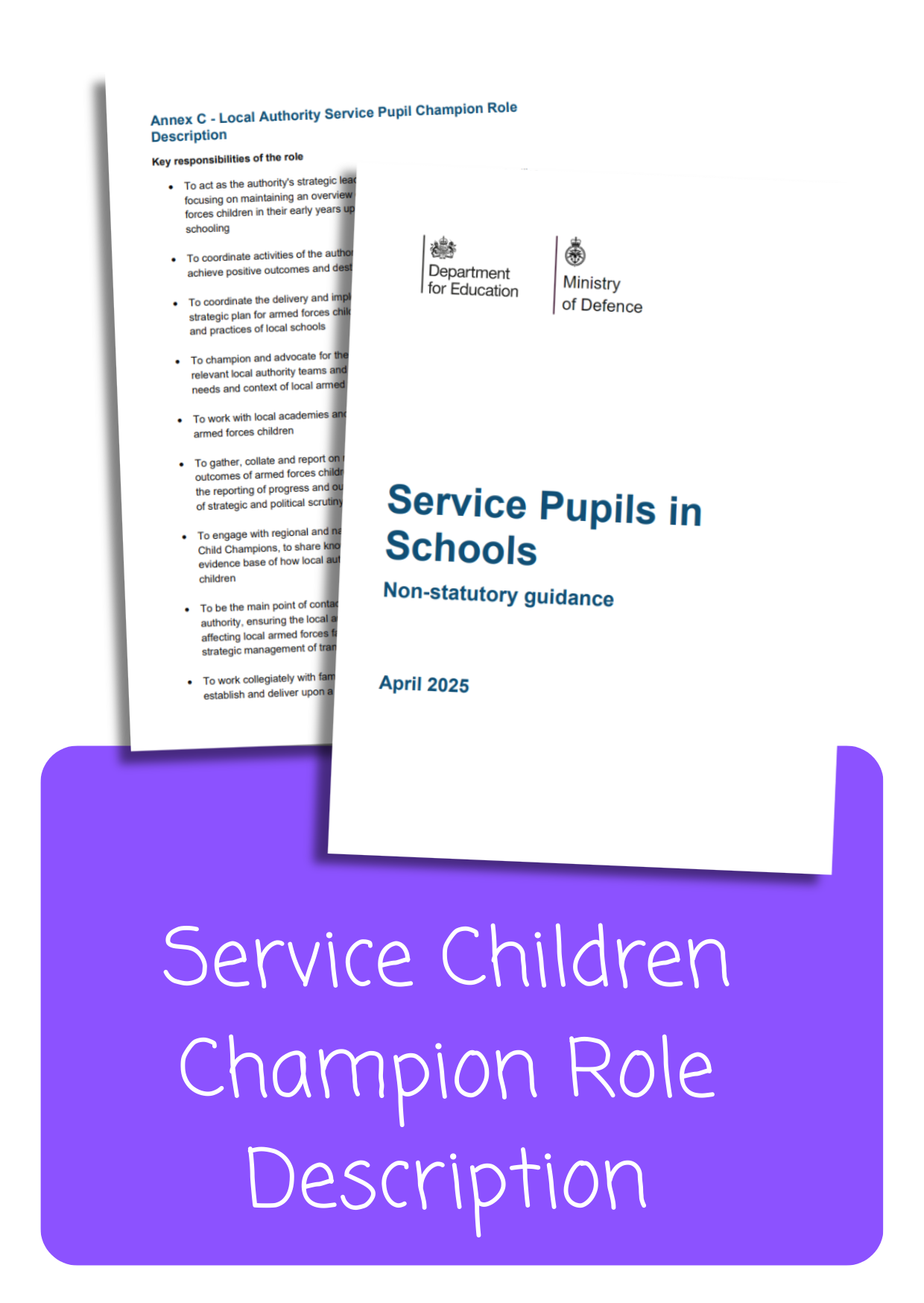
To support Service pupils, local authorities should consider nominating a member of staff to be a Service Pupil Champion. It is intended that staff in these roles would hold oversight and strategic responsibility for the experiences Service children have when in receipt of children’s services in the local authority.
The description of this role is intended to provide local authorities with suggestions on some of the key activities and responsibilities this role could hold.
It intentionally does not specify the seniority of the post-holder, nor their organisational position within the local authority. The context of each local authority is different and therefore the design of a solution to meet the below activities may need to vary between
local authorities.
The role holder should, however, hold a position with the necessary ability to influence local authority policy, strategy and practice. Roles may already exist in
local authorities that fulfil part, or all of the key responsibilities described.
The suggested responsibilities have been developed by the Ministry of Defence Local Authority Partnership (MODLAP)
Get Support in Developing Your Champion Role
If your local authority is exploring how to establish or strengthen a Service Children’s Champion role, I would be very happy to help. North Yorkshire’s model has been built over many years through research, partnership working, and practical experience supporting Service families — and I can share what we’ve learned.
I can offer:
- 1:1 conversations about how the role could work in your context
- Mentoring and guidance for new or emerging Champions
- Advice on training, systems, and partnership building
- Insights from national guidance and research to support your planning
Every area is different, and sometimes a short discussion is all that’s needed to help shape the next steps.
Get in touch
If you’d like to talk through what a Champion role could look like in your authority, or if you’re newly appointed and would welcome mentoring or support, please contact me — I’d be delighted to work with you.

Chat with the Champion